Cooperative banks
–
The new operating model “nBM”
Securing future viability through standardization and digitalization
 English
 German

Securing future viability through standardization and digitalization
Competitive pressure on the Cooperative Financial Network (Genossenschaftliche FinanzGruppe, GFG) is growing – driven by direct banks as well as fintech and big tech companies. At the same time, margins are shrinking, regulatory requirements are tightening, and digitalization is changing both customer expectations and working methods. Many institutions are recognizing that their historically grown structures are increasingly reaching their limits: a high degree of vertical integration, a wide variety of processes and a lack of scalability are hindering efficiency and preventing necessary adjustments.
This is where the new operating model “nBM” comes in. It bundles processes intelligently, establishes standardized workflows and provides central platforms, allowing cooperative banks to work more efficiently, reduce costs and strengthen their digital future-viability.

“The nBM follows the business model perspective, acts as an enabler and establishes the foundation for a future‑proof banking organization.”
Thorsten Ströhl, Partner
The nBM underscores that the transformation of a cooperative bank cannot take place in isolation. Dovetailing strategic foresight, competitive market development and a consistent focus on operational and production efficiency is becoming a holistic, multidimensional management challenge.

The strategy – “why”
First, the institution’s role in the regional market is defined and the added value it creates for customers is clearly articulated. The strategic framework serves as guidance for all decisions and provides the basis for the entire transformation.

The business model – “what”
It determines which customer segments are served and which products are focused on. The business model concentrates resources on the most important strengths and ensures a differentiated offering in the market.

The operating model – “how”
At this level, implementation is organized and operationalized. Standardized processes ensure efficiency while maintaining proximity to customers as well as advisory expertise. The operating model combines strategy and business model.
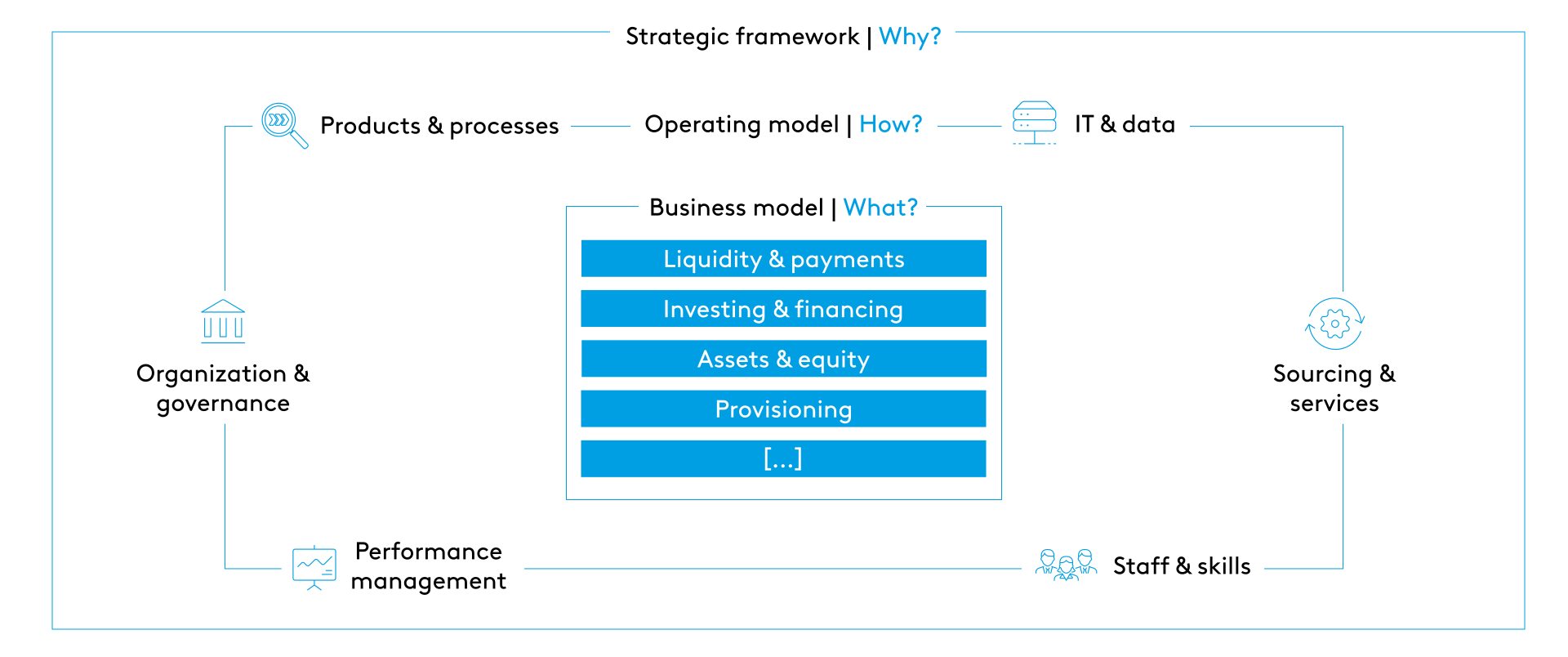
The path to the nBM is a strategic process that encompasses all levels of the institution – from processes and governance to customer interfaces. The following five steps focus on the key topics for initializing the nBM in a logical sequence and enable efficient, results-oriented implementation that takes each institution’s individual characteristics into account.
Ideally, the transformation process begins with a structured status quo analysis to identify where capacities are tied up, which tasks can be standardized and where immediate efficiency gains can be achieved.
This analysis creates transparency regarding the degree of vertical integration, process diversity and bottlenecks. It also lays the foundation for achieving quick wins and making reliable decisions during ongoing work on the nBM.
The second step is to develop a clear target picture that defines which services will continue to be provided in-house, where standardization makes sense and how regional strengths can be combined with digital future-viability.
This target picture enables informed prioritization and provides the basis for subsequent governance and operating model decisions.
The third step creates a binding structure. Roles, responsibilities, and decision-making channels are specified to ensure that the management of initiatives as well as operational implementation are clearly organized and allocated.
This establishes an organizational logic that makes the new operating model viable in everyday operations and breaks down silos.
During the implementation phase, new processes are tested, staff are specifically enabled, and changes are supported by means of professional change management so that the new operating model takes effect quickly.
Pilot projects generate confidence, early communication increases acceptance, and a robust KPI framework makes development steps quantifiable, which further accelerates the rollout across the entire institution.
A framework for continuous further development is established that consistently incorporates regulatory requirements, technological trends and scaling potential.
This approach fosters a learning organization that works efficiently in the long term and actively evolves the nBM.
The result is a digitally integrated and future‑proof operating model. Processes become more efficient, structures more transparent and decisions more comprehensible. This transformation will have a lasting impact – on employees, customers and the entire regional ecosystem.
We support institutions during the introduction of the new operating model, from status quo analysis to sustainable implementation. We analyze your current position, identify potential for greater efficiency and work with you to develop a realistic target picture. When designing the governance structure, we establish clear responsibilities and prioritize measures based on their impact and feasibility. We also provide professional change management to support implementation.
As a long-term partner, we understand the specific challenges of the Cooperative Financial Network, balancing regional independence with network integration. Our goal is to achieve a consistent, easily implementable transformation with clearly defined steps that can be put into practice in day-to-day business and deliver measurable results.

“Transformation can only succeed if efficiency, digitalization and regional strength go hand in hand, which is precisely what the new operating model represents.“
Tjark Klindworth, Senior Manager
With the nBM, the Cooperative Financial Network is transitioning to the “new normal” – an organizational structure that is efficient, digitally integrated, yet still regionally rooted. Standardized processes, central platforms and a clear allocation of roles simplify day‑to‑day operations and strengthen proximity to customers.
The nBM ensures the alignment of strategy, business model, and operational processes, thus optimizing internal structures, reducing costs and ensuring long-term digital future-viability. When implemented early on, the nBM enables the development of a resilient, flexible and integrated organization that can swiftly adapt to market changes. For cooperative banks this means increasing efficiency, maintaining proximity to customers and ensuring future viability – all within the framework of the “new normal”.