
The new harmony in bank mangement
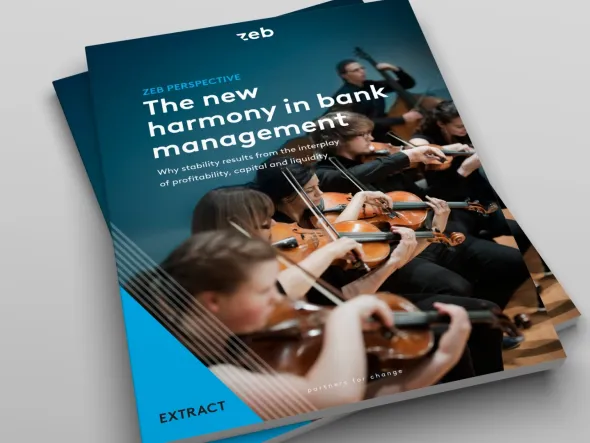
Why stability results from the interplay of profitability, capital and liquiditys
Regional banks – especially savings banks and cooperative banks – are major pillars of the German financial system. They secure needs-based financing for retail customers as well as local companies and authorities, thus making a crucial contribution to the economic development of their respective regions.
At the same time, they offer the population reliable options for secure investment and retirement provision. Their business models aregeared towards long-term customer relationships, regional proximity and stability – and thus have a balancing and stabilizing effect in a highly diversified financial system.
That’s why regional banks play a key role in maintaining the system’s equilibrium. At the same time, there is growing pressure – driven by demographic trends, increasing regulatory requirements, IT complexity, threats to information security and volatile sources of income.
It is precisely because of these changes that regional banks have to deal with many issues at once. New management cycles have been established and present-value as well as periodic perspectives defined. Sustainable risk management was first put on the agenda, then deprioritized – only to now return with even more momentum. At the same time, DORA has made a significant contribution to the topic of digital resilience.
Against the backdrop of this wide range of topics and challenges, our white paper shows: A modern management orchestra requires more than just individual well-tuned instruments and professionals to operate them – regional banks need to harmoniously coordinate tempo, volume and rhythm to improve their management capabilities.
Our instruments and the conditions for a harmonious orchestra and its successful interplay
- Profitability
- Capital
- Liquidity and refinancing structure
- Sustainability (risk management and strategy)
- DORA/ICT
- Organizational interplay