 English
 German
English
German
German
English
German
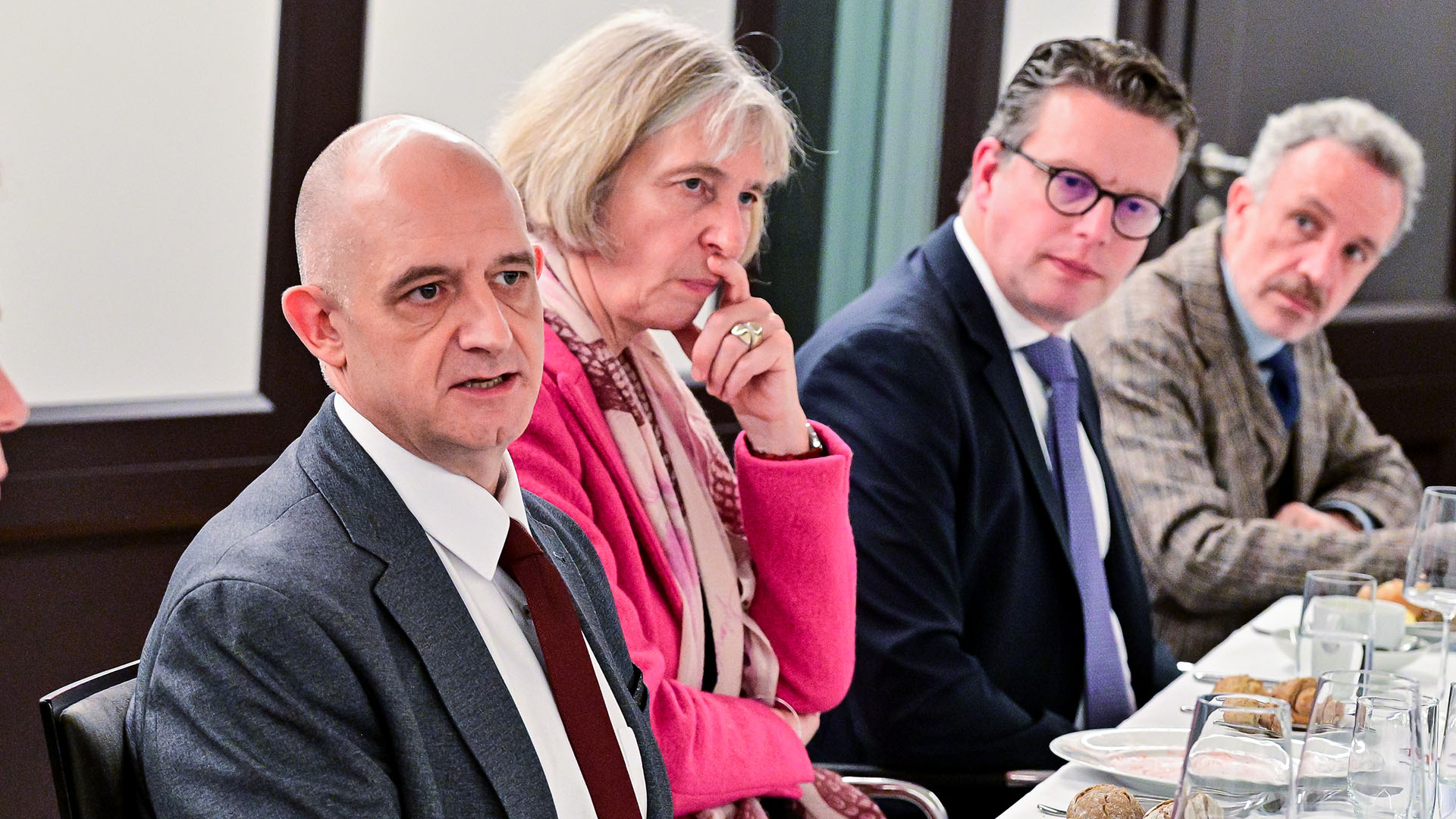
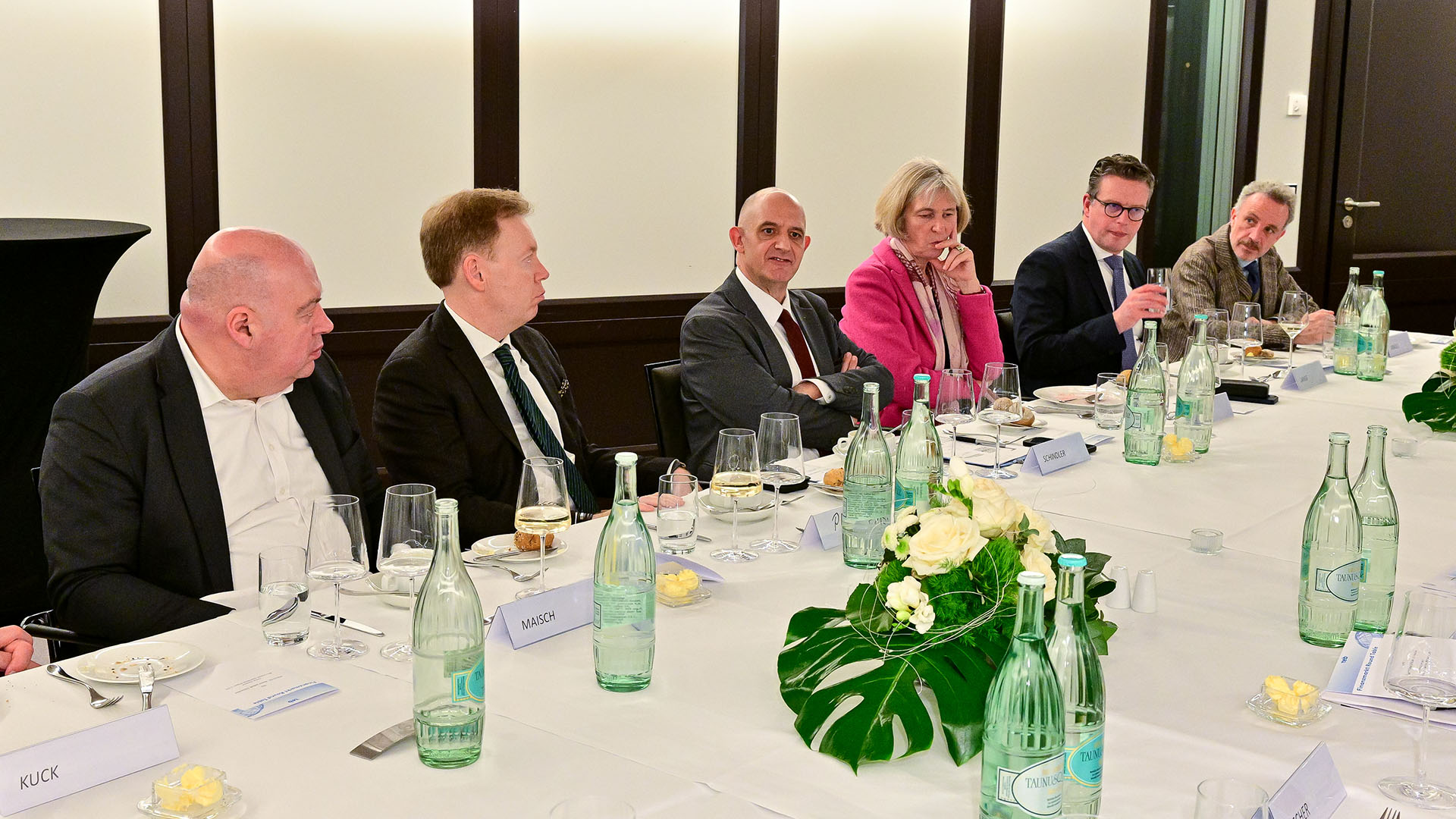
“Prevention of money laundering and terrorist financing – a challenge for banks?” was the central question at the zeb.Financial Market Roundtable with guest speaker Dr. Hans‑Jakob Schindler, Senior Director at the Counter Extremism Project (CEP) and long‑standing advisor to the UN Security Council. In his opening statement to invited senior bank executives and financial journalists, host Thorsten Helbig, Managing Director of zeb, pointed to the enormous economic consequences of financial market crime. For 2024 alone, losses from financial crime in Germany were put at up to EUR 350 billion. In addition to the economy as a whole, financial crime also threatened the business models of all credit institutions. According to Thorsten Helbig, it was no coincidence that banking supervisors and the Anti‑Money Laundering Authority (AMLA), created at the European level for this very purpose, were instructing banks to devote more attention to this issue.
As far as money laundering is concerned, Hans‑Jakob Schindler saw a lack of transparency and strict data protection as legal and operational challenges. He pointed out that, with the exception of real estate, there was no cap on cash payments yet. The demand for a unified land register within Germany’s federal system had so far remained unfulfilled. Moreover, land register data had not yet been fully digitized. Only basic information was available on bank accounts; details remained with the tax offices. He added that the Federal Criminal Police Office (Bundeskriminalamt, BKA) did not have direct access and repeatedly came up against barriers due to tax confidentiality.
In the area of terrorist financing, security expert Schindler believed that the influence and threat posed by extremist forces remained high. Using recent indications and examples, Dr. Schindler illustrated the sources of income of various terrorist groups and stressed that the Islamic State (IS) in particular was currently profiting from the Middle East conflict. In addition, social media was less effectively moderated today than it had been a few years ago, a development that encouraged radicalization, he argued. To prevent attacks in advance, stronger legal frameworks and technical tools were needed. In addition to Islamists, the security authorities also had to monitor right‑wing extremists, the Reichsbürger movement and conspiracy ideologues. This presented a “resource problem”, he said. Prevention would be difficult without closer cooperation with social media platforms. Schindler therefore demanded: “It must be legally mandatory for these social media platforms to use their content, which they already analyze every millisecond for commercial reasons, to issue warnings if someone is not only engaging with ideologies or sharing violent fantasies but is radicalizing toward offline violence.”
Against the backdrop of the latest events in Iran, Hans‑Jakob Schindler, who headed the Federal Intelligence Service (Bundesnachrichtendienst, BND) mission in Tehran between 2005 and 2011, also gave his assessment of the situation there. According to him, the mullah regime could not be overcome so easily – its structures around the Islamic Revolutionary Guard Corps and the Guardian Council as central institutions in Iran’s political system were too strong. The influence of the well‑armed Islamic Revolutionary Guard Corps extended far beyond Iran, across the Gulf region and the Middle East. He added that, as architects and pillars of the Iranian dictatorship, the Islamic Revolutionary Guard Corps had managed to seize all levers of power and that they controlled large parts of the infrastructure in the oil, gas and telecommunications sectors.