 English
 German
English
German
German
English
German
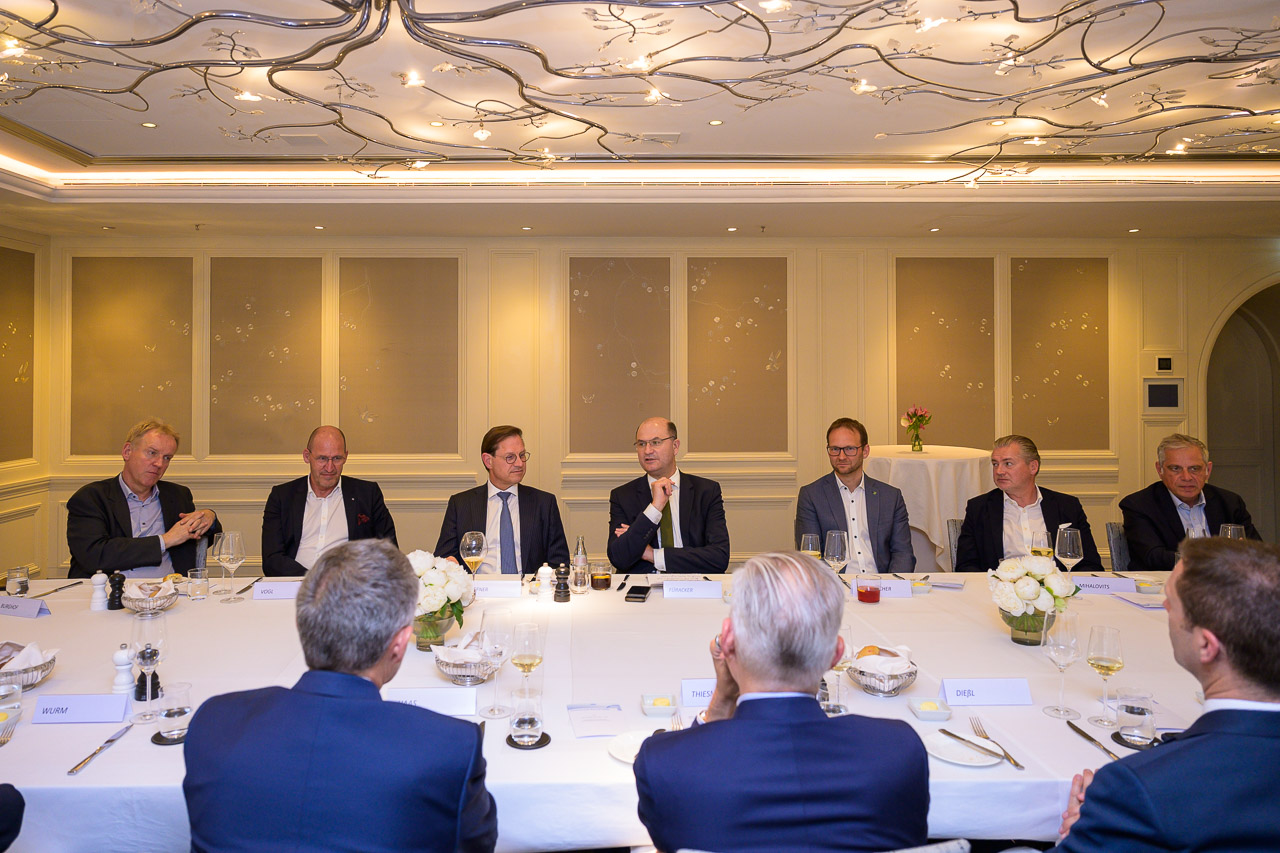
At the zeb.Finanzmarkt Round Table in Munich, Albert Füracker and board representatives from various banks discussed the current challenges regarding financial policymaking. In his opening statement, host and zeb Senior Partner Dr. Markus Thiesmeyer praised Bavaria’s solid financial and fiscal policy which he said was also regularly acknowledged by renowned rating agencies, such as S&P Global Ratings, who in 2025 once again gave Bavaria the best possible rating of “AAA/A-1+”. Nevertheless, Thiesmeyer was convinced that there were tasks easier than managing fiscal and financial policy in times of crisis. “Money is tight, little can be planned: the debt brake and climate protection, an ever-increasing number of global issues – the list of challenges is long.”
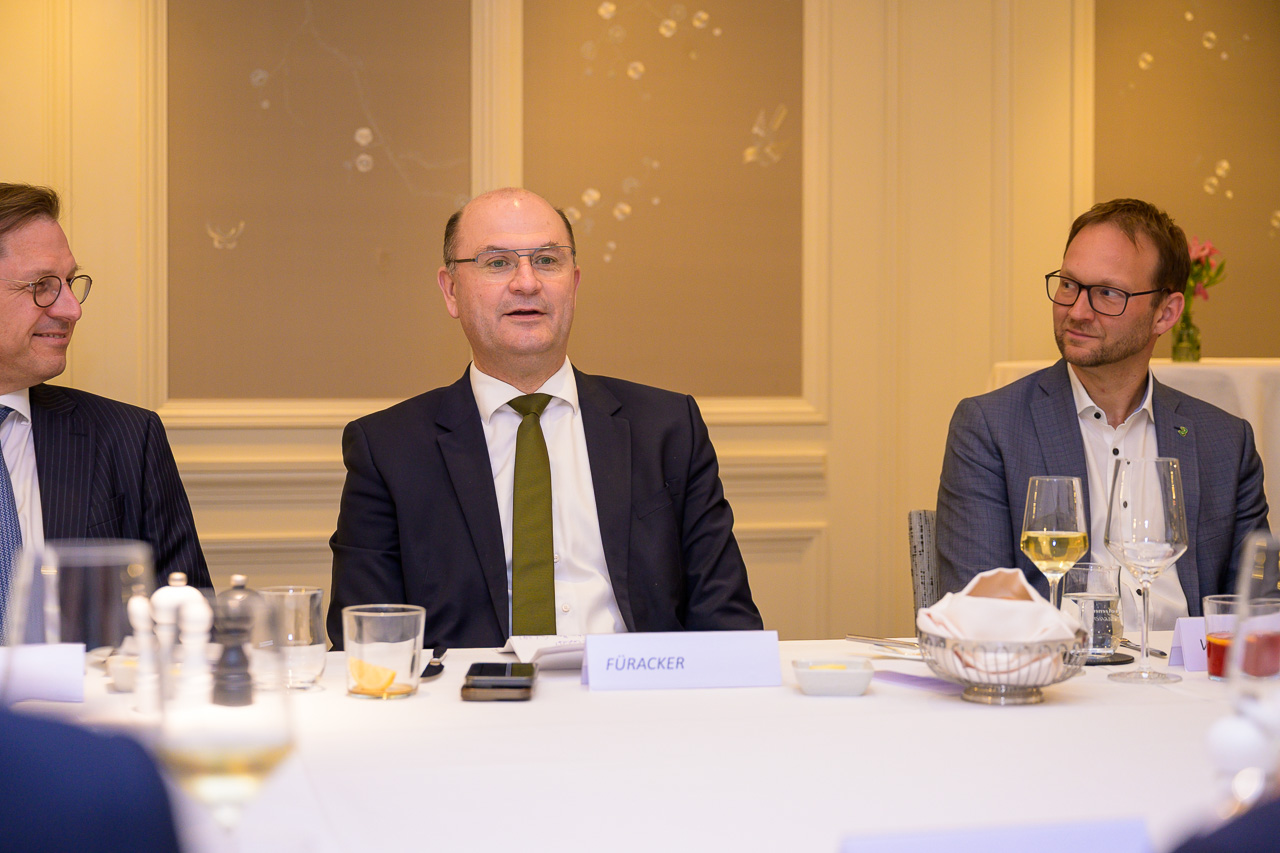
In this context, the Bavarian State Minister of Finance also commented on the much-discussed federal equalization of financial capacity and referred to the judicial review proceedings initiated by the Bavarian state government at the German Federal Constitutional Court in 2023. He explained that these proceedings were aimed at achieving a fundamental reorganization, especially in the relationship between the federal states “to restore the balance between solidarity and individual responsibility”. Füracker stated: “The equalization of financial capacity has now reached absurd proportions. In 2025, Bavaria had to raise a record sum of around EUR 11.7 bn and has already borne the lion’s share of the equalization system for years.” According to Füracker, the federal government’s commitment to relieve the donor states was an important first step. However, the relief of EUR 200 m now envisioned for Bavaria was unfortunately “merely a drop in the ocean”, corresponding to no more than approx. 2 percent of the amount that the Free State had to contribute in 2025 alone. “This will not permanently change the precarious imbalance in the equalization of financial capacity, nor will it solve the fundamental problems in the equalization system,” stated the Bavarian Finance Minister, calling for a fundamental structural reform. “We have appealed to the Federal Constitutional Court to bring about a decision this year,” said Füracker, adding that, looking at the numbers, each Bavarian citizen had paid around EUR 880 to the twelve recipient states last year. He reported that, despite unbroken solidarity, public support for the system was waning and that counteractive measures were urgently needed. Füracker did the math: “Since the introduction of the financial equalization system, Bavaria has contributed almost EUR 140 bn euros as a donor state, compared to only around EUR 3.4 bn that Bavaria received as a recipient state until the early 1990s.” The Free State was therefore calling for a fundamental reformation of the equalization system.
Not without pride, Albert Füracker reported on the bi-annual budget for 2026/2027 adopted by the Bavarian state parliament in mid-April, which, according to him does not require any new debt, provides for a top investment rate of 17.1 percent and allows one third to flow to the municipalities. “Despite the very tense economic situation, we have put together a massive, EUR 168.5 bn package for the future to send a strong signal for stability, reliability and sound fiscal management,” said Füracker.
In the further course of the lively and very open discussion, national and European policy issues also played a role. Here too, the Bavarian Finance Minister urgently called for a turnaround. His key statement was that both in Berlin and in Brussels there was no lack of knowledge and potential measures to counteract the current precarious economic situation, but that now was the time to decide on a clear path to finally implement them.